Hyaluronic acid is in almost every serum on the shelf, including ours, and it is one of the few ingredients where how you apply it changes whether it helps or quietly works against you. The fix takes no extra time.
What it actually does
Hyaluronic acid is a humectant. That means it binds water and holds it. Your skin makes its own, and the amount in skin changes as you age, which is why it turns up so often in the aging conversation. It is described as a key molecule in skin aging in the dermatology literature, and a 2018 review covers the cosmetic evidence in more detail than any product page ever will.
What it does not do is add firmness or change skin structure. It makes skin look plumper and feel smoother because it is holding water. That is a real effect and a fast one, but it is a different mechanism from the peptide side of the formula, which works slowly and on different things.
The part most people get wrong
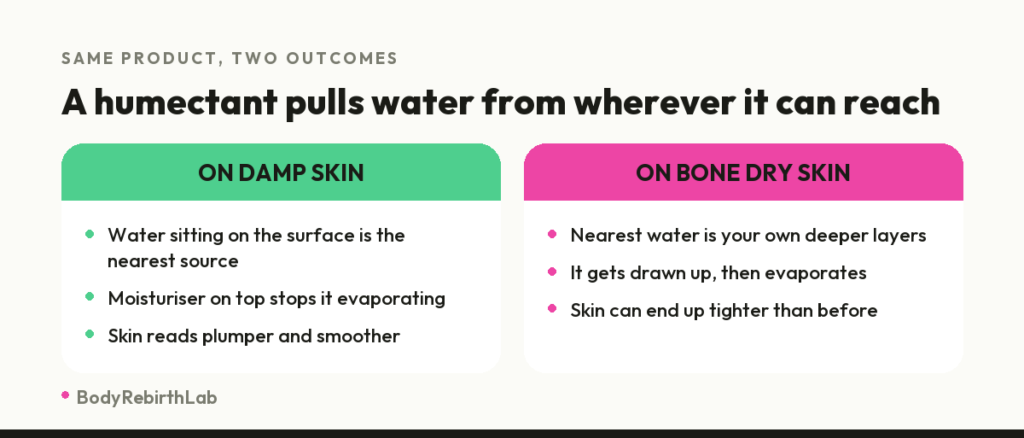
A humectant pulls water from wherever it can reach. On damp skin in a normal room it pulls from the water sitting on the surface and from the air. On bone dry skin in dry air, the nearest available water is the deeper layers of your own skin, so it can draw moisture upward where it then evaporates. People in dry climates and air conditioned offices notice this as a serum that somehow leaves them tighter than before.
The two step fix
- Apply to damp skin. Not dripping, just not fully dry. Straight after cleansing, within a few seconds, is ideal.
- Seal it with a moisturiser. This is the step that stops the water leaving again. Without it you have given the humectant nothing to hold onto. The AAD makes the same point in its dry skin guidance: moisturiser goes on soon after washing, while skin is still damp.
If your air is very dry
In genuinely dry air, a humectant alone will struggle no matter how you apply it. Layering something occlusive over the top matters more in winter than in summer, and a humidifier does more for your skin than most products do. None of that is a flaw in the ingredient, it is just physics.
Where this fits in a routine
Serum on damp skin, moisturiser straight after, both morning and night. That is two of the four steps in our simple AM and PM routine. If you want to know how to tell how much hyaluronic acid is actually in a product you are looking at, that comes down to reading the ingredient list.
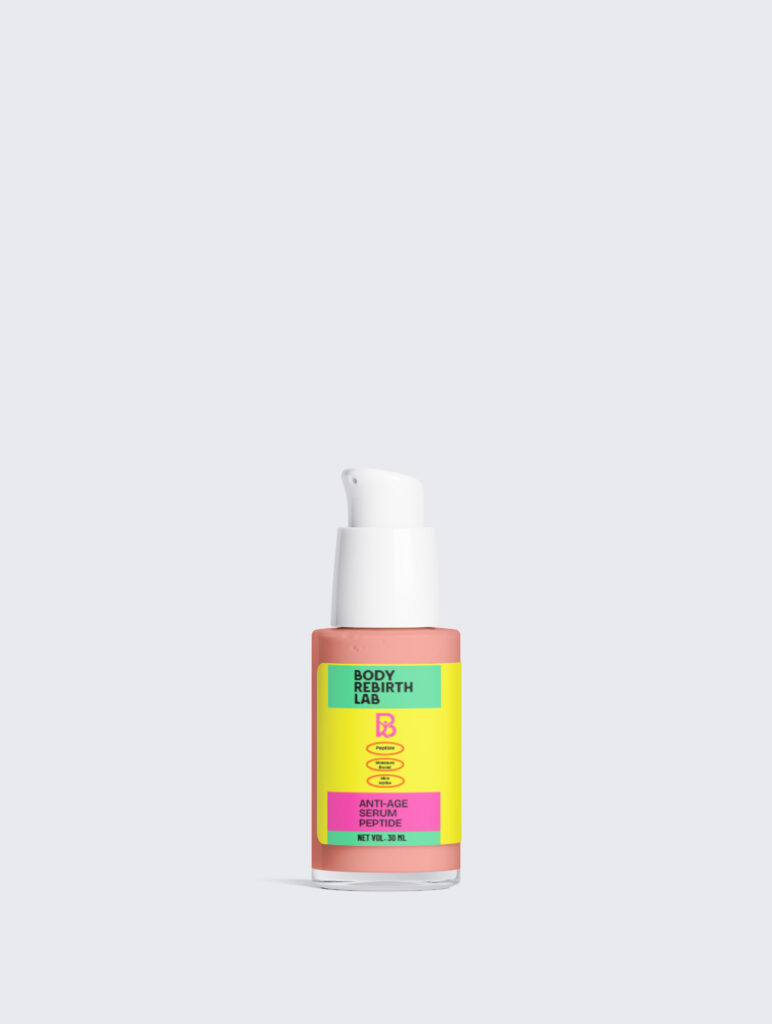
Our Peptide Anti-Aging Serum pairs hyaluronic acid with Hexapeptide-11, and the Peptide Ageless AM/PM Cream is the sealing step.
Get the next one by email
Plain, useful skincare writing and first look at new products. No daily spam, unsubscribe whenever.
[…] washing guidance. Second, add a humectant and seal it, which is the hyaluronic acid step, and the damp skin trick matters more here than anywhere else. Third, wear sunscreen daily, applied in the quantity actually […]
[…] serum. On damp skin, so the hyaluronic acid has water to hold onto. Here is why damp matters. This is the step doing the supportive […]
[…] Hyaluronic acid holds water in the upper layers of skin. This is the part you feel fastest, usually as skin that looks plumper and less tight within days. It is also well studied in the context of skin aging, and there is a trick to applying it, covered in why hyaluronic acid works better on damp skin. […]