Ask the internet whether you should use peptides or retinol and you will get a hundred confident answers in both directions. The comparison is slightly off to begin with, because the two ingredients are not competing for the same job.
How each one works
Retinol is a vitamin A derivative. It speeds up skin cell turnover, which is why it has the deepest evidence base in skincare for the look of fine lines and uneven texture. The American Academy of Dermatology has a useful primer on retinoids and retinol, and the clinical literature goes back decades, including a 2007 trial on naturally aged skin. It is also why retinol commonly causes an adjustment period of dryness, flaking and sensitivity.
Peptides are short amino acid chains used as supportive, signalling ingredients. They work with the skin rather than pushing it, which makes them gentle and easy to tolerate, and also means the effects are subtler and slower. Ours is Hexapeptide-11, explained here.
The honest trade off
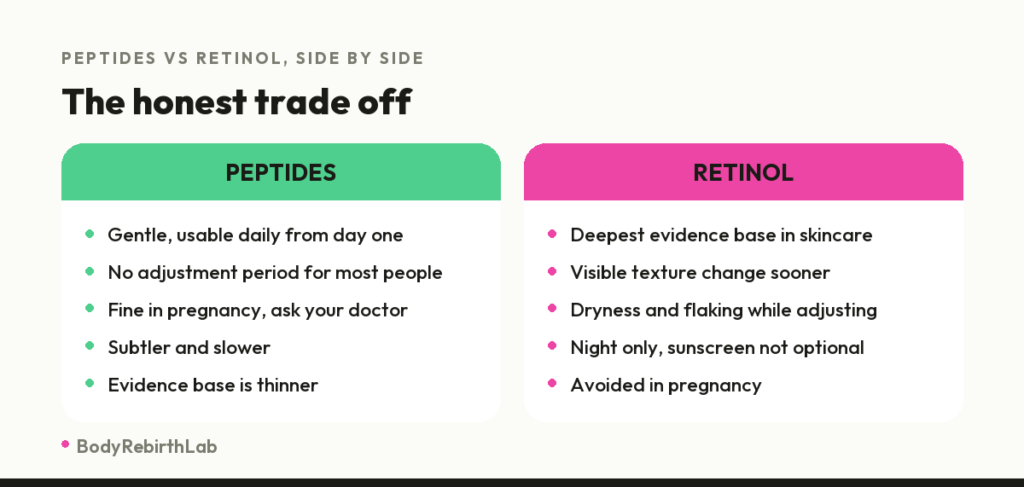
- Strength of evidence: retinol, clearly.
- Tolerability: peptides, clearly. Most people can use a peptide serum daily from day one with no adjustment period.
- Speed: retinol shows texture change sooner, at the cost of the irritation phase.
- Routine complexity: retinol needs careful sun protection and is usually night only. Peptides are simple and work morning or night.
Who should start with peptides
Peptides are the easier starting point if your skin runs sensitive or dry, if you have tried retinol before and abandoned it during the flaking stage, if you are pregnant or breastfeeding and have been told to avoid retinoids, or if you simply want something you will actually keep using every day. If dryness is the bigger issue, the AAD’s advice on relieving dry skin is worth reading before you add any active at all.
Who should start with retinol
If your main concern is visible texture and your skin has tolerated active ingredients well in the past, retinol gives you more for the effort. Start low, start twice a week, and build up. Sun protection stops being optional: see how to apply sunscreen properly, because most people use far less than the tested amount.
Using both
This is what most people land on, and the two are not in conflict. The usual approach is retinol at night and a peptide serum in the morning, which keeps the two separated and gives your skin a gentler day. If you want both at night, apply the peptide serum first and let it settle. Our AM and PM routine shows where each step sits.
One rule worth keeping: change one thing at a time. If you add two new actives in the same week and your skin reacts, you have no idea which one to blame. And if the real problem is dullness rather than texture, why your skin looks tired is the better starting point.
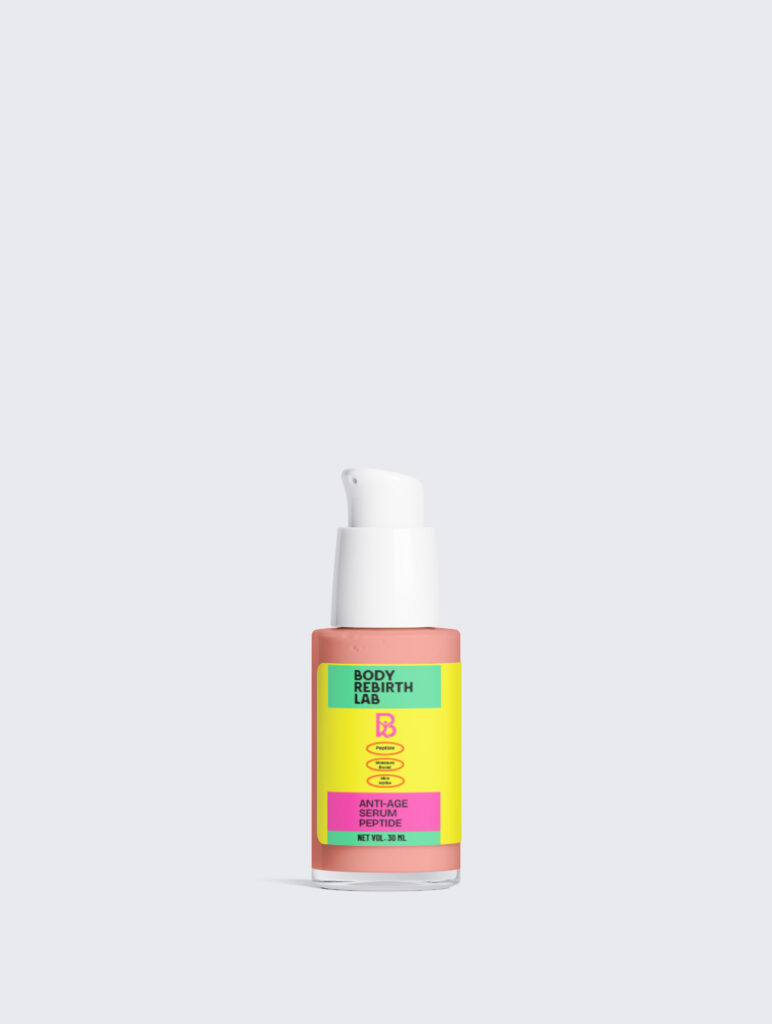
Our peptide entry point is the Peptide Anti-Aging Serum, built around 2% Hexapeptide-11 with hyaluronic acid.
Get the next one by email
Plain, useful skincare writing and first look at new products. No daily spam, unsubscribe whenever.
[…] Worth being honest about: the published work on Hexapeptide-11 is mostly manufacturer research and small studies, not the large body of independent evidence that sits behind something like retinol, where a 2007 study on naturally aged skin is one of many. Hexapeptide-11 is a well tolerated ingredient with a reasonable case behind it, not a miracle. If you want the comparison in full, we wrote peptides vs retinol. […]