Vegan and cruelty free appear together on so much packaging that most people read them as one claim. They are two separate statements about two different things, and a product can genuinely be one and not the other.
Vegan is about ingredients
Vegan means the formula contains no animal derived ingredients. In cosmetics the common ones are beeswax, lanolin from wool, carmine from insects, collagen and keratin from animal sources, and some forms of hyaluronic acid and glycerin, both of which can be animal derived or plant derived or produced by fermentation depending on the supplier.
This is checkable. Ingredient names are standardised, so you can look any of them up in the CosIng database and see what it is. That is one more reason reading the ingredient list beats trusting the front of the box.
Cruelty free is about testing
Cruelty free refers to animal testing, not ingredients. It is a claim about process and supply chain, which makes it much harder to verify from the outside. The complication is that it can apply at several different levels: the finished product, the individual ingredients, and whether any supplier further up the chain tested anything.
Because of that, the strongest version of the claim comes from a third party scheme with its own criteria and audit, of which Leaping Bunny is the best known. A logo from a scheme like that carries more weight than the words printed in a brand’s own font, for the same reason COSMOS certification carries more weight than the word natural.
Why a product can be one and not the other
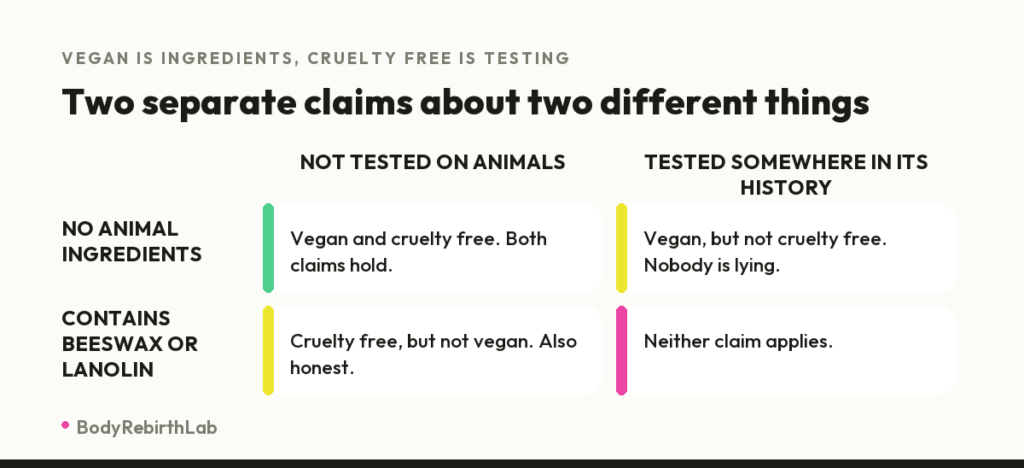
A product with no animal ingredients at all can still have been tested on animals somewhere in its history, so vegan but not cruelty free. And a product never tested on animals can contain beeswax or lanolin, so cruelty free but not vegan. Neither combination involves anyone lying.
Where the regulation sits
Neither term has a tight legal definition in most markets, which is why third party certification does the heavy lifting. In the US, cosmetics labelling requirements come from the FDA, which publishes what a cosmetic label has to carry, and the broader framework was substantially updated by MoCRA in 2022. The EU operates its own regime, which is where the ban on animal testing for cosmetics is strictest.
How to actually check a brand
- Read the ingredient list for the usual animal derived suspects, rather than trusting the badge.
- Look for a named third party certification rather than a generic logo the brand designed itself.
- Check where the product is manufactured and which market’s rules it was made under.
Where we stand
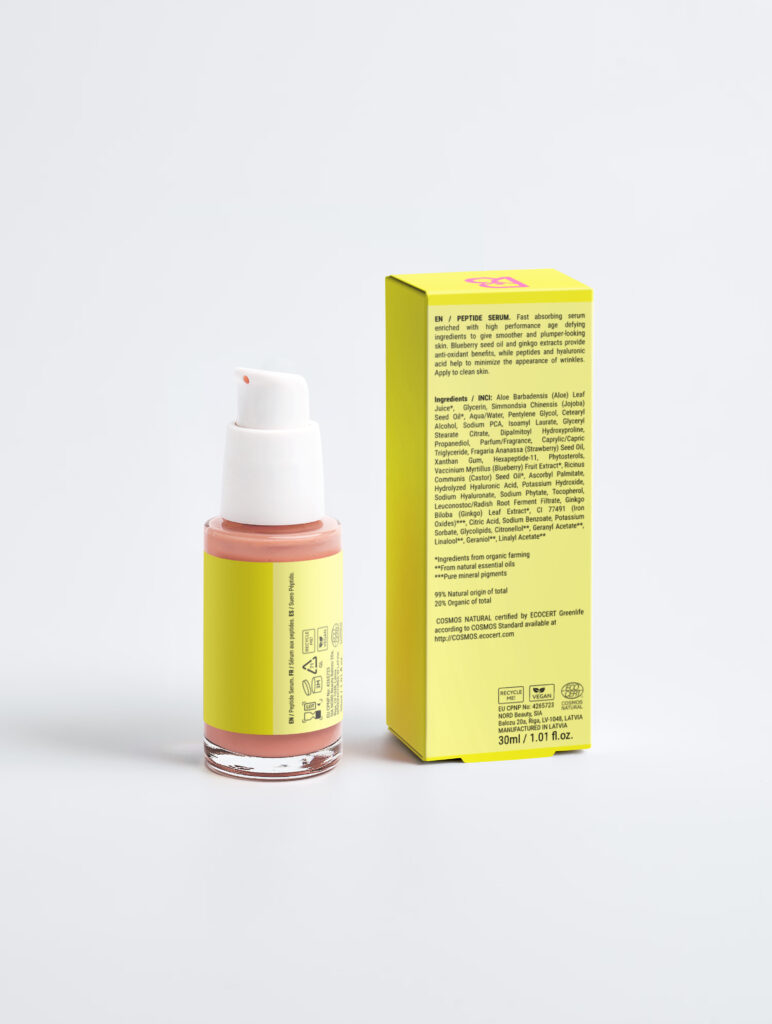
BodyRebirthLab products are vegan and cruelty free, manufactured in Latvia under EU cosmetic rules, and COSMOS NATURAL certified by ECOCERT. We would rather you checked that against the ingredient list than took our word for it. If dullness or dehydration is what brought you here, this is the more useful read.
See the full range on the shop page.
Get the next one by email
Plain, useful skincare writing and first look at new products. No daily spam, unsubscribe whenever.
[…] free and COSMOS NATURAL certified by ECOCERT. Those last two claims are different in kind, and we explain why. You can see the range on the shop page, or start with the Anti-Age Peptide […]
[…] like COSMOS NATURAL. Vegan and cruelty free are their own particular case, covered in what those labels legally mean. In the US, the rules for cosmetics were overhauled by MoCRA, the Modernization of Cosmetics […]