Peptide is one of those words that shows up on every skincare label and almost never gets explained. If you are looking at our Peptide Anti-Aging Serum and wondering what Hexapeptide-11 is actually doing in there, this is the straight version.
Peptides, in one paragraph
Your skin is held together in large part by structural proteins, collagen and elastin being the two everyone has heard of. Proteins are long chains of amino acids. A peptide is a short chain of the same building blocks. Because peptides are small, they are used in skincare as signalling ingredients: the idea is that the right short chain applied to the skin supports the processes that keep skin looking firm and smooth.
So what is Hexapeptide-11?
Hexapeptide-11 is a six amino acid peptide, originally derived from a yeast fermentation process. In cosmetic formulas it is used for its reported support of skin firmness and elasticity, which in practice shows up as skin that looks a little more resilient and a little less crepey over time. You can look up its official cosmetic ingredient entry in the European Commission’s CosIng database, which is the public record of what every INCI name refers to.
Worth being honest about: the published work on Hexapeptide-11 is mostly manufacturer research and small studies, not the large body of independent evidence that sits behind something like retinol, where a 2007 study on naturally aged skin is one of many. Hexapeptide-11 is a well tolerated ingredient with a reasonable case behind it, not a miracle. If you want the comparison in full, we wrote peptides vs retinol.
What a 2% concentration means
Our serum carries Hexapeptide-11 at 2%. Peptides are typically used at fractions of a percent, so this sits at the generous end of normal rather than the token sprinkle you sometimes find where an ingredient is on the label mainly to be on the label. Knowing where an ingredient sits in the list tells you a lot, and reading an ingredient list is a skill worth twenty minutes of your life.
The rest of the formula matters too
- Hyaluronic acid holds water in the upper layers of skin. This is the part you feel fastest, usually as skin that looks plumper and less tight within days. It is also well studied in the context of skin aging, and there is a trick to applying it, covered in why hyaluronic acid works better on damp skin.
- Ginkgo biloba extract is included as an antioxidant, there to help skin cope with the daily environmental load that dulls it.
A realistic timeline
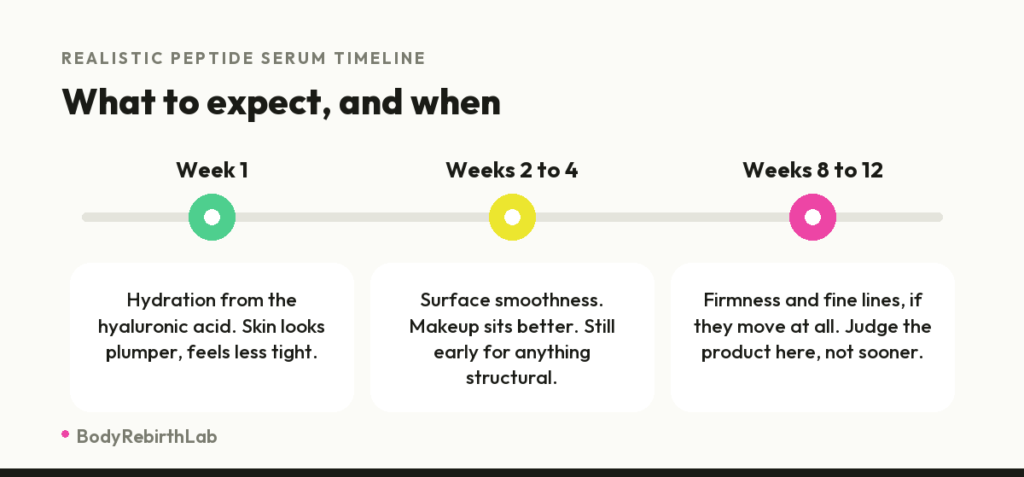
Hydration effects from the hyaluronic acid show up quickly, often in the first week. Anything related to firmness and fine lines works on skin cell turnover time, so give it eight to twelve weeks of consistent daily use before you judge it. Skincare rewards boring consistency far more than it rewards stacking new products, which is the same conclusion the American Academy of Dermatology reaches in its guidance on healthier looking skin.
How to use it
Apply to clean skin before anything heavier. The serum is lightweight and absorbs fast, so it layers comfortably under a moisturiser. The full order is in our simple AM and PM routine. If you want the serum and a moisturiser working together, the Anti-Aging Performance Duo pairs it with our Peptide Ageless AM/PM Cream.
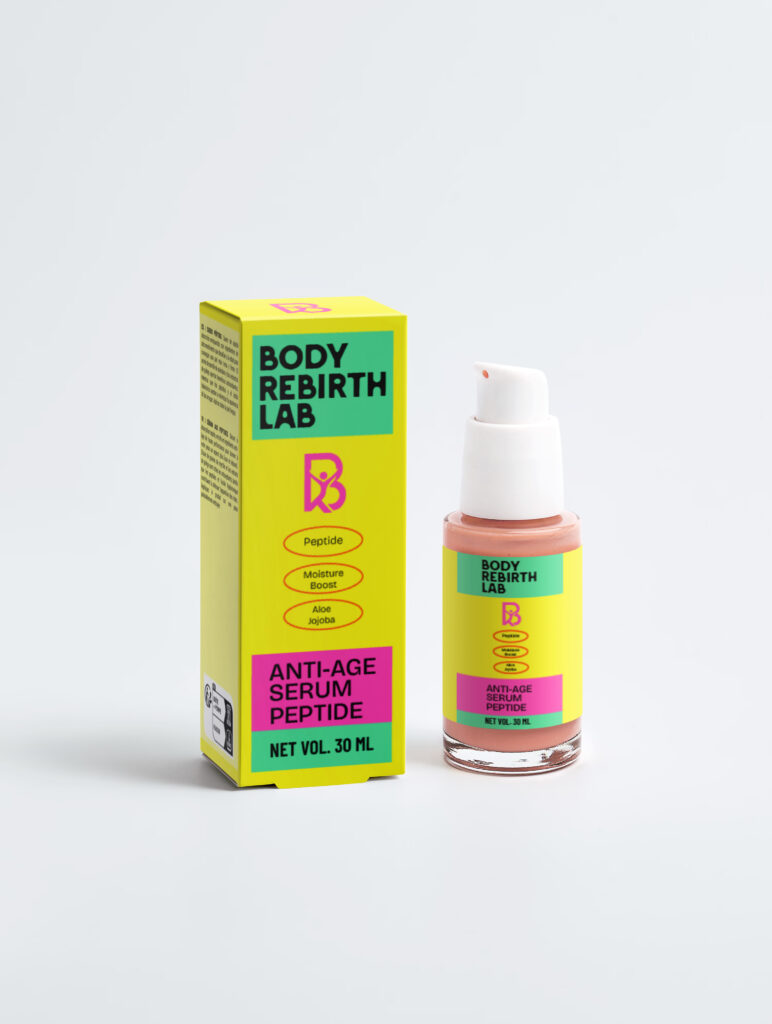
See the Peptide Anti-Aging Serum.
Get the next one by email
Plain, useful skincare writing and first look at new products. No daily spam, unsubscribe whenever.
[…] it is holding water. That is a real effect and a fast one, but it is a different mechanism from the peptide side of the formula, which works slowly and on different […]
[…] a real concentration is giving you information the label alone never would. We state 2% for Hexapeptide-11 for exactly that reason. The list also tells you nothing about formulation quality, whether the […]
[…] So treat it as one input. It tells you something real about how a product was made and verified. It tells you nothing about whether the active you care about is present at a useful level, which is still a label reading question, or whether the ingredient has evidence behind it, which is a separate question again. […]
[…] Peptides are short amino acid chains used as supportive, signalling ingredients. They work with the skin rather than pushing it, which makes them gentle and easy to tolerate, and also means the effects are subtler and slower. Ours is Hexapeptide-11, explained here. […]